How Do You Socialize a Vizsla Puppy?
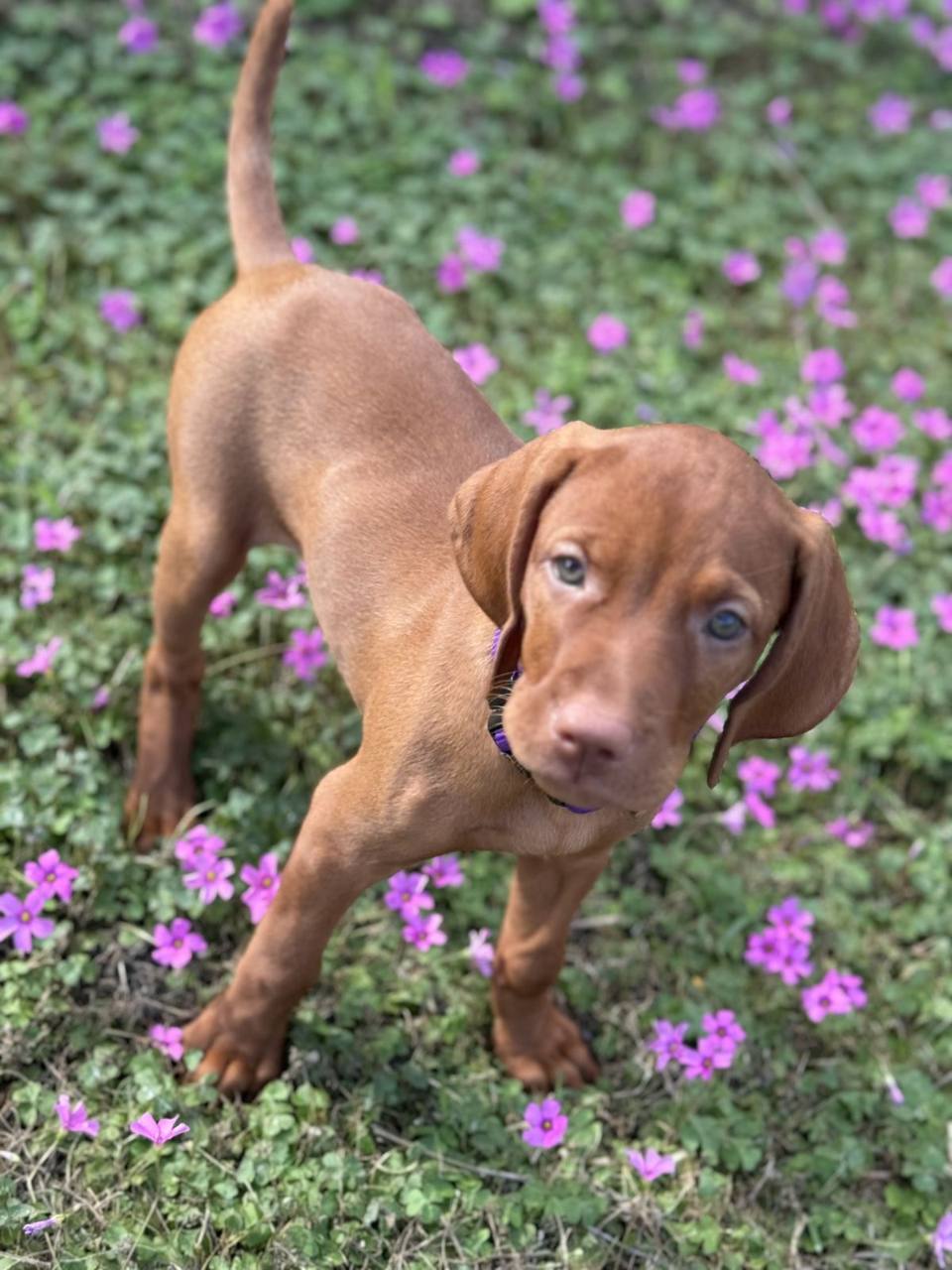
Vizslas are bright, affectionate and sensitive dogs. Those are wonderful traits, and they are also why good early socialization matters. A puppy that meets the world in small, happy steps is far more likely to grow into a confident adult.
What does socialization really mean?
It isn’t just meeting other dogs. It means helping your puppy learn that people, places, sounds and handling are normal and safe. The goal is calm curiosity, not nonstop excitement.
When should you start?
Start the day your puppy comes home. The first few months are the most important window. Our puppies leave us used to daily handling and attention, and you carry that work on from about eight weeks old.
Is it safe before vaccinations are finished?
Your puppy goes home with its first vaccinations, but the series isn’t complete yet. Ask your vet which places are safe. Until then, avoid dog parks and areas where unknown dogs go. You can still do plenty:
- Carry your puppy to watch traffic, shops and people from your arms.
- Invite friends over to meet it calmly at home.
- Arrange visits with healthy, vaccinated dogs you know and trust.
- Take short car rides.
What should your puppy experience?
- People of different ages, including some in hats or boots.
- Household sounds such as the vacuum, the dishwasher and the doorbell.
- Surfaces such as grass, gravel, tile, wood and wet ground.
- Gentle touching of paws, ears, mouth and tail.
- The crate, the leash and the car.
How do you keep it positive?
Let your puppy approach at its own speed. Offer treats and praise for bravery. If it backs away, give it more distance and try again later. Never drag or force a worried puppy toward something. Several short sessions work better than one long outing.
How about children and other pets?
Supervise every meeting. Teach children to sit down to hold the puppy, to be gentle and to leave a sleeping puppy alone. Introduce cats and small pets slowly, with the puppy on a leash and the other animal free to leave.
What about hunting dogs?
If you plan to hunt, add birds, cover and water gradually. Loud noises need special care: gunfire should be introduced slowly, ideally with help from an experienced trainer. One of our owners was proud to report that their young dog was not gun shy on a first hunt. Read more about Vizslas as hunting dogs.
Should you take a class?
A well-run puppy class gives safe practice around new dogs and people, and it helps you learn too. Many owners go on to obedience classes as their Vizsla grows.
What if your puppy seems fearful?
Some caution is normal. If fear is strong or getting worse, talk with your vet or a positive-reinforcement trainer early. For the first days at home, our first-week guide will help.